
How to Arrange Transportation for Patients With Disabilities

For patients with disabilities, accessing healthcare often depends on having reliable transportation that provides the necessary support when traveling to medical appointments, rehabilitation centers, or hospitals. Arranging it involves more than booking a ride. It takes careful planning, accessible vehicles, trained drivers, and support tailored to each patient's mobility and medical needs.
Whether you are a family member or caregiver booking a single ride, or a hospital, clinic, or care facility coordinating transportation for many patients, the right NEMT service helps people travel safely, comfortably, and on time.
This guide covers the options and steps for both individuals and healthcare organizations.

6 Steps to Arrange Transportation for Patients With Disabilities
1. Understand the Patient’s Transportation Needs
First, determine exactly what the patient needs during transportation. Disabilities can affect mobility in different ways, so transportation requirements vary from one person to another.
Consider questions such as:
- Does the patient use a wheelchair, stretcher, walker, or cane?
- Can the patient transfer from a wheelchair to a vehicle seat?
- Do they need assistance getting into and out of the vehicle?
- Do they require a wheelchair-accessible vehicle?
- Will a caregiver or family member travel with them?
- Do they need additional support during the trip?
- Is the transportation for a routine appointment or a medical treatment?
Understanding these requirements helps you choose a transportation service that can properly accommodate the patient.
2. Choose the Right Type of Vehicle
Not every vehicle is suitable for patients with disabilities. A standard car may work for someone who can comfortably walk and transfer into a seat, but it may not be appropriate for someone who remains in a wheelchair during transportation.
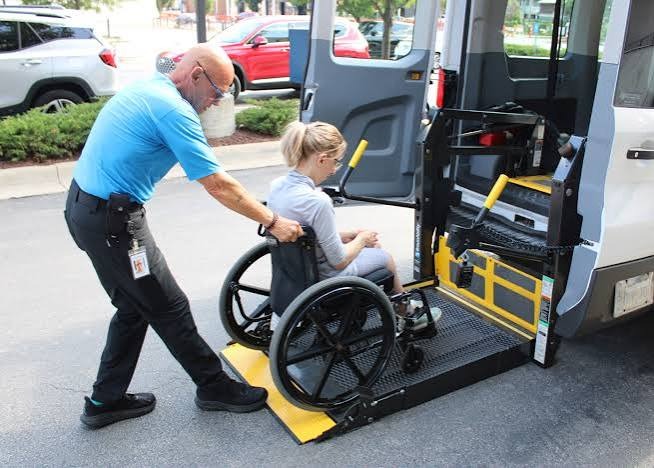
Wheelchair-accessible vehicles are designed with features such as ramps or lifts that make boarding easier. They also provide secure spaces where wheelchairs can be properly positioned and restrained during travel.
For patients who need to travel while lying down, stretcher transportation may be more appropriate. The important thing is to match the vehicle to the patient's mobility and medical requirements rather than choosing transportation based only on availability.
3. Look for Trained Transportation Providers
Non-emergency medical transportation (NEMT) is built for patients who need to reach care but don't need an ambulance. When arranging transportation for a patient with a disability, it is important to choose a provider that understands the needs of passengers with limited mobility.
Ask the transportation provider about driver training and the type of assistance drivers are able to provide. Drivers should understand how to safely assist passengers with mobility challenges and how to use accessibility equipment properly.
You can also ask whether the provider regularly transports wheelchair users, seniors, patients attending medical appointments, or individuals with other mobility limitations. Experience with these passengers can make the transportation process smoother for both the patient and caregiver.
Understand the difference between NEMT and ambulance transportation to determine which option fits a patient's medical condition and transportation needs.

4. Schedule the Ride in Advance
Medical transportation should generally be arranged as early as possible, particularly when the patient needs a wheelchair-accessible vehicle or specialized equipment.
When making a reservation, provide the transportation company with accurate information about the patient's needs. Mention the type of mobility device they use and whether the patient will need assistance boarding or exiting the vehicle.
Also provide the correct pickup location, destination, appointment time, and any important access information. For example, if the patient needs to be picked up at a specific entrance, providing that information in advance can help avoid confusion.
For recurring appointments, ask whether the provider offers scheduled transportation. This can make it easier to arrange transportation for regular medical visits or treatment sessions.
5. Confirm Accessibility at Both Locations
A wheelchair-accessible vehicle is only part of the transportation process. The pickup and drop-off locations should also be accessible.
Before the trip, check whether there are suitable entrances, ramps, elevators, accessible parking areas, or other facilities the patient may need. If the patient is being transported to a hospital or medical facility, confirm where accessible transportation should arrive.
For residential pickups, consider whether the vehicle can safely reach the patient's entrance. Narrow driveways, stairs, uneven surfaces, or long distances from the parking area can make boarding more difficult.
Planning these details ahead of time can reduce unnecessary waiting and make the trip more comfortable.
6. Keep Important Information Ready
When arranging transportation, having the necessary information available can make the booking process easier. Depending on the provider and type of transportation, you may need to provide:
- Patient's name and contact information
- Pickup and drop-off addresses
- Appointment date and time
- Type of mobility device
- Whether the patient can transfer from a wheelchair
- Whether a caregiver will accompany the patient
- Special accessibility requirements
- Any other information the transportation provider needs
Keeping this information organized is particularly helpful when transportation is needed regularly.
Safety Essentials for Every Trip
- Pre-trip planning: Review the patient's condition, equipment, and travel time before the ride. Good preparation prevents most problems on the road.
- Secure positioning: Wheelchairs should be locked into securement points, with a seat belt for the passenger. Nothing should shift during transit.
- Properly equipped vehicles: Look for working lifts or ramps, accessible seating, and clean, inspected vehicles.
- Trained drivers: Drivers should know how to assist passengers, secure mobility devices, and respond calmly in an emergency.
Related Articles:
How to Choose Transportation for Elderly Parents
Eligibility Criteria for Non-Emergency Transportation
Common Transportation Challenges for Dialysis Patients
How NEMT Services Support Patients With Disabilities
Kerico Health Care provides non-emergency medical transportation for individuals, families, and healthcare organizations that need accessible patient transportation.
- Wheelchair-accessible transportation
- Trained and experienced drivers
- Transportation for medical appointments, dialysis, therapy, and more
- Assistance based on individual mobility needs
- Safe and comfortable transportation for patients
Book your ride or Partner with us today to get the best NEMT services.


